

I have been working with clients on GLP-1 therapies for five years now, since before they became a headline. In that time I have watched these medications change lives, and I have watched them quietly go severely wrong for people who deserved better.
Here is what I can tell you after five years: the medication is almost never the problem. The method is.
The same drug, at the same dose, can strip one person down to a weaker, under-fueled version of themselves and rebuild another into the strongest, healthiest athlete they have been in a decade. The difference comes down to a handful of mistakes, and I see the same ones over and over.
Before we get to them, thirty seconds of background.
What these medications actually are
GLP-1 is a hormone your own gut makes every time you eat. It tells your body: food has arrived, release insulin, ease off the hunger signals, slow down and digest.
In plain English: GLP-1 is your body’s “we’re good, you can stop eating now” text message.
Your natural GLP-1 vanishes from your bloodstream in about two minutes. The medications are longer-lasting versions of that same messenger: a message pinned to the top of the screen for days. And they have evolved fast. Semaglutide (Ozempic, Wegovy) targets GLP-1 alone. Tirzepatide (Mounjaro, Zepbound) adds a second gut hormone, GIP, which improves how your fat tissue and muscle handle nutrients and softens the nausea. Retatrutide, not yet FDA approved, adds a third: glucagon, which turns up how much energy you burn while the other two turn down how much you eat. Each generation is more powerful.
Which brings us directly to the mistakes. Because more powerful means more to get right.
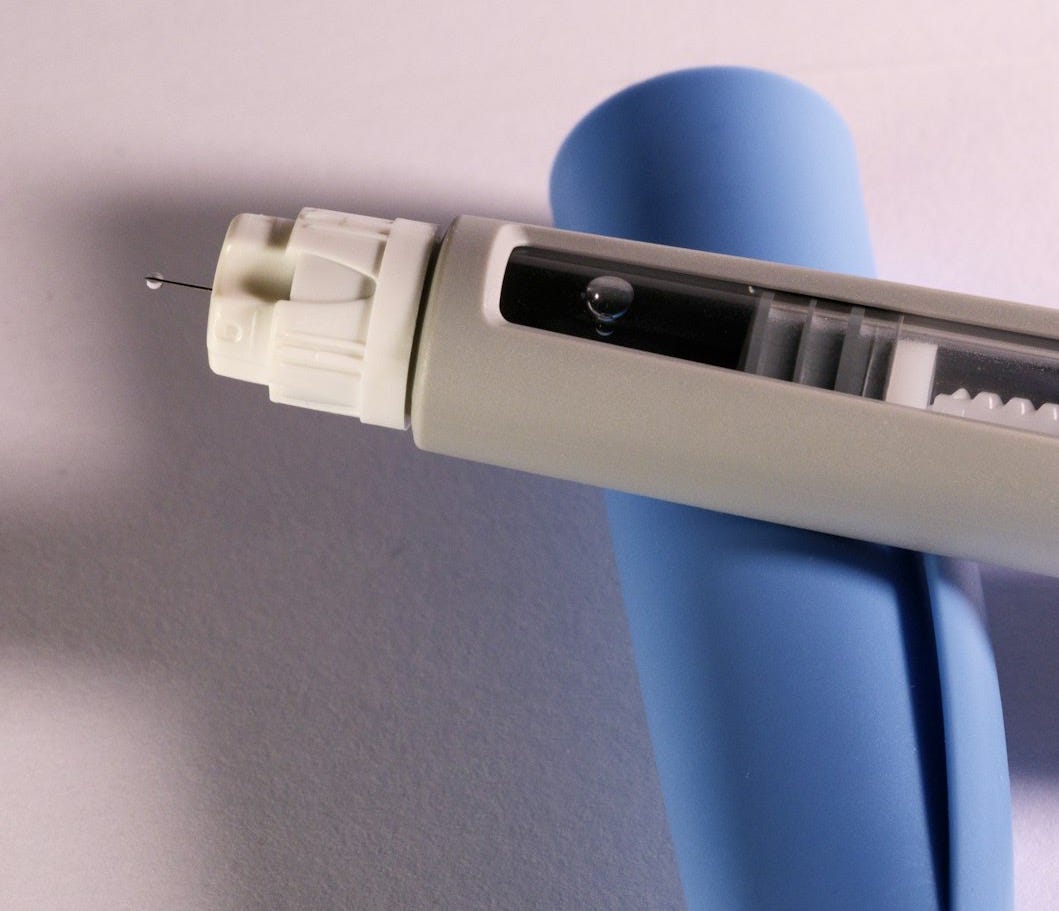
Mistake #1: Letting the dose run on autopilot
This is the one that genuinely alarms me, and I see it weekly.
The standard playbook is start low, then step the dose up on a fixed schedule until you hit the maximum. That escalation has quietly become the default for everyone, and too often it runs on autopilot: no follow-up, no weigh-ins, no body composition measurements, no side effect conversation, and no one asking the most basic question in medicine: is this dose still right for this person?
I cannot count the people who have come to me saying they only had 20 pounds to lose, yet found themselves on a near-maximum dose because that is what the calendar said to do next.
In plain English: imagine a doctor doubling your blood pressure medication every month without ever taking your blood pressure again. We would call that malpractice. With GLP-1s, escalation without measurement has somehow become routine.
To be fair to physicians, many are working in ten-minute appointments and these medications arrived fast. But the consequence lands on you. More is not better with these compounds. The right dose is the lowest one that achieves your goals while protecting your muscle, your fueling, and your quality of life.
